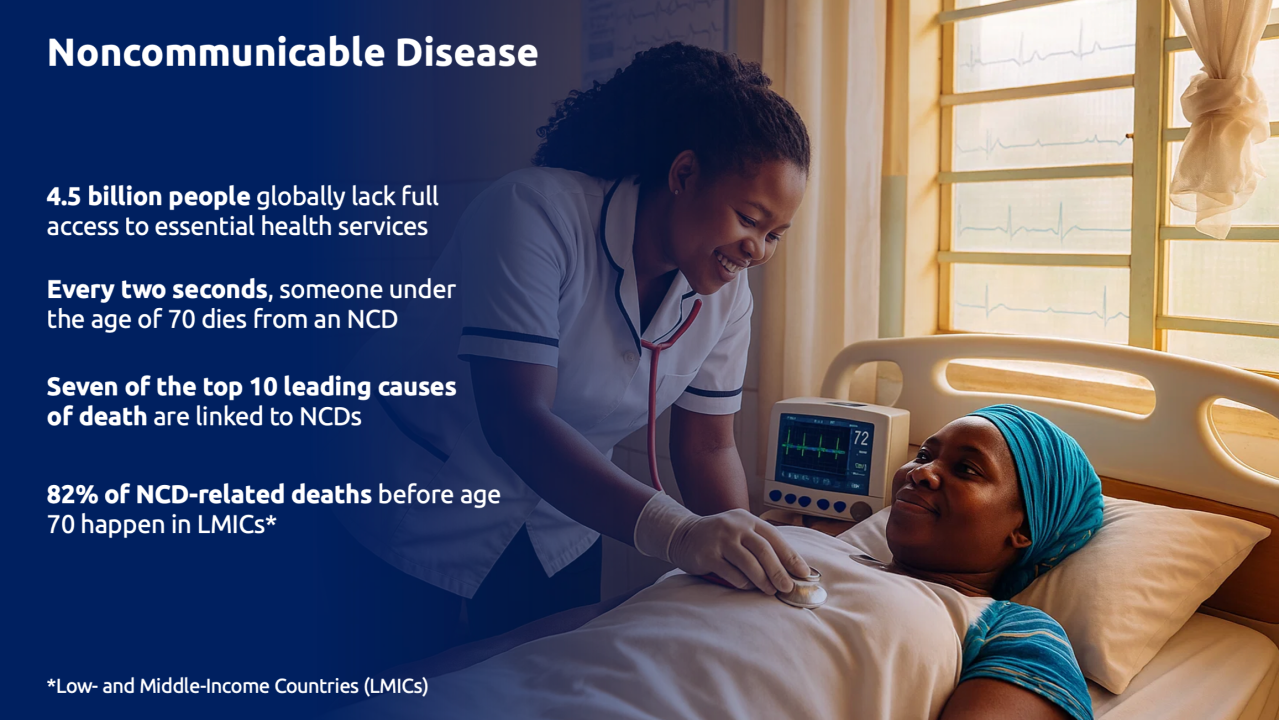
In many emerging countries, healthcare is still episodic. A person visits a clinic only when symptoms become unmanageable. Appointments are limited. Follow-up is rare. For people living with chronic conditions, this system leaves them unsupported for most of their health journey.
This is not only a resource problem. It is a gap in continuity and connection. And it is exactly where digital health can make a measurable difference.
Digital Health as a Scalable Solution
Digital health is not just about making systems more efficient. In lower-resource settings, it is often the only way to bring consistent care to those who are underserved. It can link patients with local clinicians. It can empower nurses and community health workers. It can create a structured support network that continues even after a clinic visit ends.
This opportunity is backed by global connectivity. More than 5 billion people now use mobile phones. Over 95 percent of the world’s population lives within reach of a mobile broadband network. In sub-Saharan Africa, smartphone adoption is projected to reach over 65 percent by 2025. These numbers show that the foundation for digital health already exists in most emerging regions.
With this infrastructure in place, relatively modest investments can drive large-scale impact.
A Use Case: Hypertension
Hypertension is a leading example. It is the most common chronic condition worldwide, affecting over 1.2 billion people. It contributes to more than 10 million deaths each year, primarily through strokes, heart attacks, and kidney failure. In many emerging countries, it remains underdiagnosed and poorly managed. Awareness is low. Treatment is inconsistent. Adherence is poor.
A digital health program for hypertension can provide measurable support. Patients can monitor their blood pressure from home using mobile-guided tools. They can receive medication reminders and lifestyle tips tailored to their condition. Health workers can access real-time data and intervene when risks rise. A small number of doctors can oversee larger populations by working through connected teams.
This model ensures continuity of care by connecting patients and providers outside of clinical settings, even where physical infrastructure is limited.
From Fragmentation to Connection
Digital health does more than deliver content. It creates networks. It links doctors, nurses, patients, and caregivers in a coordinated system. It allows one community health worker to guide dozens of families. It allows a single doctor to consult hundreds of cases over time. Most importantly, it brings structure and accountability to a space that has often lacked both.
Emerging countries do not need to replicate the infrastructure of high-income systems. They can leapfrog into connected care models that are more efficient, more affordable, and more scalable. The key is to build solutions that reflect local realities and build on what already exists.
Our Commitment to Action
At Newel Health , my team and I are working to bring this vision into practice. We are focused on chronic conditions like hypertension because they represent the highest burden and the greatest opportunity. We believe that care should not depend on geography, and that technology should serve as a bridge, not a barrier.
With smart, adaptive tools, it is possible to bring high-quality care to people who have never had consistent access before. The opportunity is real. The technology is ready. The time to act is now.
Ervin Ukaj · August 2024